What Are Indian Knowledge Systems?
Why do some societies innovate with confidence while others struggle to find direction?
The answer is understanding your identity and your origins. Modern education offers the tools required to navigate a changing world, but does not account for the intellectual heritage that helped shape that world. A society that understands its heritage will always have a better vision of its future and how to shape it.
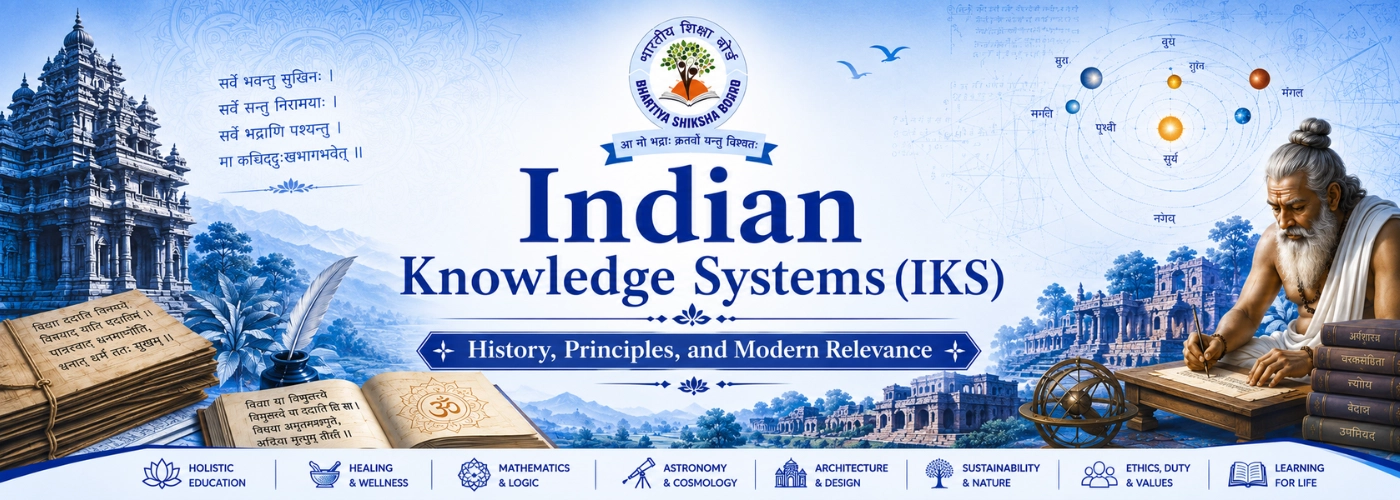
Indian Knowledge Systems is among the oldest knowledge Systems of the world. Developed over centuries, its various branches contributed to human understanding in fields such as medicine, astronomy, mathematics, and architecture.
Indian Knowledge Systems (IKS) encompass the entire spectrum of learning that has flourished across the Indian subcontinent for many thousands of years. There are various branches of knowledge under IKS.
Many of these academic disciplines delve into subjects concerning humanity, societal structures, or the cosmos. Ancient Indians acquired this knowledge by observation, experimentation, discussions and implementations of ideas. Through discussion and practical application, this knowledge was integrated into numerous areas of human existence.
This information was passed on through tools other than printing textbooks. Oral tradition, different schools of thought, discussions between priests, merchants, artisans or within a community and teacher-student parampara are some of the ways ancient Indians documented this information for future generations.
Origins and Evolution of Indian Knowledge Systems
Approximately 3,000 years of contributions from scholars, artisans, physicians, and philosophers have established the Indian subcontinent as a cradle of knowledge that has evolved continuously over time.
Early Foundations: The Indus Valley Civilization
Indian Knowledge Systems were among the earliest forms, originating with the Indus Valley civilization. Excavations done in the region of India showed that the cities were built with a drainage system, advanced knowledge about weights and measures, and also about an artisan's craft.
The Vedic Period
The earliest documentation of knowledge within India occurred during the Vedic period. During this time, knowledge from the Vedas was shared and passed down orally before being written in the Vedas and other Vedic texts. Scholars explored subjects such as philosophy, language, mathematics, astronomy, medicine, ethics, and more.
The Classical Period
During the classical period, India experienced advancements in various fields of study. Fields of study included mathematics, astronomy, medicine, linguistics, logic, philosophy, architecture, and governance. Some of the most influential scholars of this period produced works that are still studied today.
Ancient Universities
India was an important center of learning during several historical periods due to the existence of renowned universities such as Takshashila, Nalanda, and Vikramashila. These institutions attracted students from across Asia whose fields of study included philosophy, medicine, mathematics, grammar, astronomy, and more.
Medieval Period
Even during the medieval period, there were efforts to produce and preserve knowledge of India. India’s monasteries, temples, and educational institutions contained manuscripts of knowledge. Additionally, various artisans, physicians, farmers, and teachers contributed to the preservation of knowledge during these centuries.
Modern Period
An interest in Indian Knowledge Systems in the modern period includes studying India’s knowledge Systems in relation to other disciplines within the modern world. For instance, many of India’s universities are investigating its ancient knowledge Systems using modern scientific methods. This revival of ancient knowledge aims to preserve this knowledge and contribute it towards the resolution of current challenges facing India and the rest of the world.
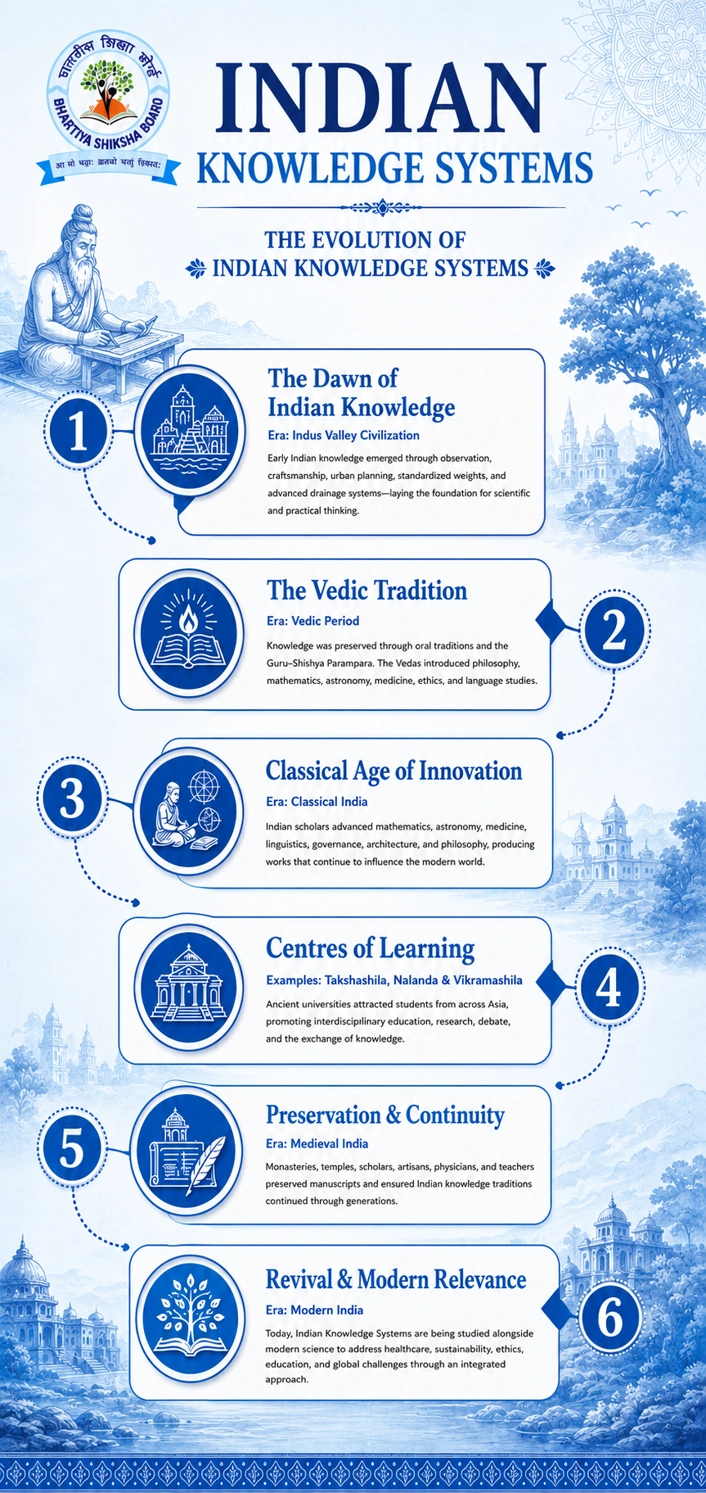
The origins and evolution of Indian Knowledge Systems over time establishes the vast history of India and its contributions to the development of the world’s knowledge Systems. An understanding of the history of these knowledge Systems helps to appreciate the vast contributions of India to the world’s development of knowledge.
Characteristics of Indian Knowledge Systems
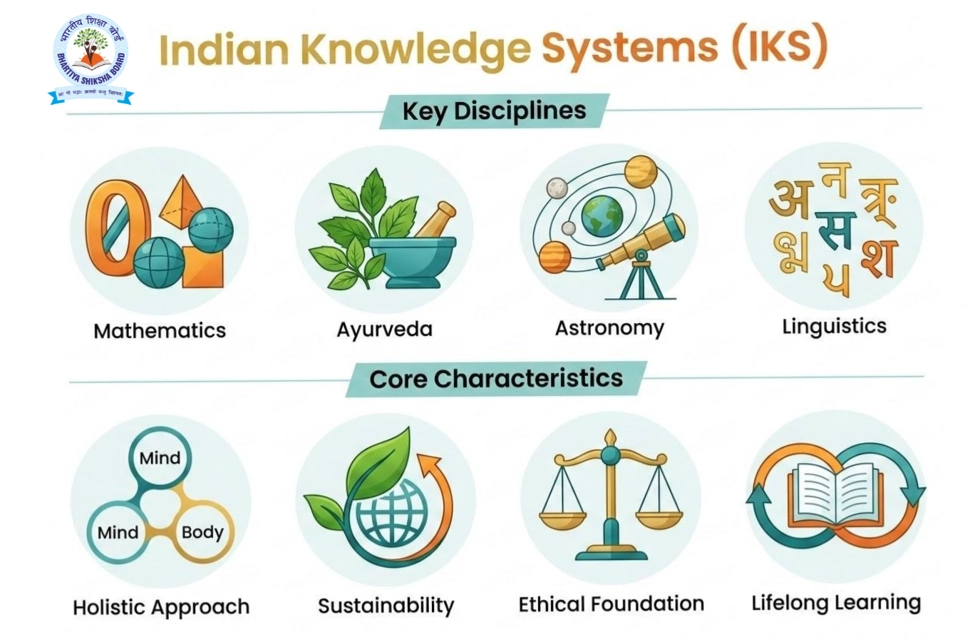
Understanding the characteristics of Indian Knowledge Systems (IKS) requires an examination of how knowledge was acquired and applied within an ethical framework, ultimately fostering practical wisdom and self-realisation. Key characteristics of IKS include interdisciplinary learning, a keen observation of the environment, ethical and sustainable practices, and the integration of theory with real-world application.
Holistic Approach to Learning
Indian Knowledge Systems (IKS) emphasises the holistic nature of learning. In IKS, you try to perceive the individual, society, nature and the universe as integrated with one another and part of a complete system. IKS helps you learn how different subjects are connected to each other instead of being disciplines in their own separate existence. Thus IKS will guide you to expand your intellect, evolve your ethical being and understand humanity's role in nature.
Interdisciplinary Learning
The beautiful thing about the Indian Knowledge System is that knowledge itself was not divided. Scholars often overlapped into fields of learning that were not necessarily their primary area of interest/expertise. If one learnt mathematics, one could also be learning astronomy.
Logicians/philosophers used logic/tools of reasoning and their philosophy to tackle questions of ethics and society. Study of language found expression in educational ideas. The study of nature was applied in agriculture and daily life. Most importantly, notice how inter-connected all these fields of learning were. When you learn, you never learn something in isolation but learn about the world around you. Even today when we learn something new, it opens up our mind and pushes us to learn more.
Learning Through Experience
Wisdom from Indian Knowledge Systems was not only acquired by intellectuals studying concepts; It was developed by ordinary people observing daily events and questioning how they occurred, communicating with other beings and learning from their experiences. Education was never confined to textbooks and classrooms. They learned through a continuous process of observing, inquiring, analyzing through experiments and using the knowledge gained for their daily living.
Ethical Foundation of Knowledge
A key characteristic of the Indian Knowledge System has always been its inseparable link between knowledge, ethics, and responsibility. Ancient sages/ thinkers maintained that education should prepare individuals to gain wisdom and better discernment. Learning should help individuals become more useful to others. Emphasis was laid on constantly striving to enhance and deepen one’s understanding of a particular subject/system for the purposes of self-development as well as for benefiting society at large.
Sustainability in Ancient India
Ancient Indians had the foresight to understand that we do not live in isolation. We live on this earth, which we share with other creatures and with future generations of our own species. Ancient Indians realized that if we exhaust our natural resources, what would we leave for our children? They realized that man and nature are interdependent.
Integration of Theory and Practice
It's quite remarkable how many terms from our Indian tradition resonate so strongly with the kind of discourse we encounter today. Concepts such as sustainability and protecting the environment have been around for thousands of years.
Major Sources of Indian Knowledge Systems
Some of the most important sources of IKS include:
- Vedas – Among the oldest literary works of the Indian subcontinent, the Vedas contain hymns, philosophical reflections, observations about nature, and insights into human life. They form the foundation of many later Indian knowledge traditions.
- Upanishads – These texts explore some of humanity's deepest questions about consciousness, reality, ethics, and the nature of existence. Even today, their philosophical discussions continue to inspire scholars and seekers around the world.
- Ayurveda – Developed in ancient India, Ayurveda is a holistic system of healthcare that emphasizes prevention, balance, and overall well-being rather than simply treating illness after it occurs.
- Arthashastra – This remarkable work examines governance, economics, statecraft, diplomacy, and leadership. What makes it particularly impressive is how many of its observations about administration and public policy remain relevant even today.
- Yoga – It is often seen only as a physical exercise, in truth it is a much broader discipline that aims to harmonise the body, mind and spirit to achieve greater well-being and self-awareness.
- Vedangas – A group of six auxiliary disciplines that were created to support study of Vedas. They range from subjects like phonetics, grammar, astronomy to metrics and indicate the methodical and analytical nature of ancient Indian scholarship.
- Nyaya- This school of philosophy studies logic and knowledge acquisition.
- Vaisheshika- Similar to Nyaya, this tradition studies the nature of matter and reality.
- Panini's Grammar- This is a text on linguistics that has significantly influenced the study of language in both India and the rest of the world.
- Classical Literature- This is a broad category of texts that include a variety of works that cover history, ethics, and more.
Yet another interesting facet of Indian Knowledge System is the fact that Indians never allowed their ideas to remain bogged down in books. Knowledge and learning were applied to real life. Ancient thinkers saw ideas take form in society whether it be in the field of medicine, architecture, politics, agriculture, education you name it. Ancient Indians realized that bookish knowledge is of little use unless it can be applied to the real world in order to fix what is broken and better people’s lives. Ancient Indians seemed to have found the balance between deep contemplation and pragmatism.
The breadth of this system is impressive, as it did not rely on a single stream of education. Instead, learners could explore several different topics and their interconnections. Many of these texts remain highly relevant today because the questions they pose continue to be explored.
These texts and their contents represent the numerous ways in which Indians created an intellectual system that was applicable to their society and would continue to inspire the region’s scholars into the present day.
A Common Misconception About Indian Knowledge Systems
One of the most common misconceptions of Indian Knowledge Systems is that it is a system dedicated to spirituality and religious education. While this is certainly one of the systems dedicated to such studies, it is only one of many components of the Indian knowledge system.
IKS also includes studies in the following areas: science, mathematics, medicine, agriculture, linguistics, architecture, metallurgy, ecology, governance, economics, education, and the arts. Each of these areas was studied by Indians in ancient times, and many of these contributed to the knowledge gained in the modern world in areas such as science and medicine.
In addition, through Indian Knowledge Systems and its various branches of discipline one learns about not only Indian culture and its roots but also a knowledge system that can fuel the fire of innovation in current times, along with offering practical relevance today through research.
Why Indian Knowledge Systems Are Relevant Today
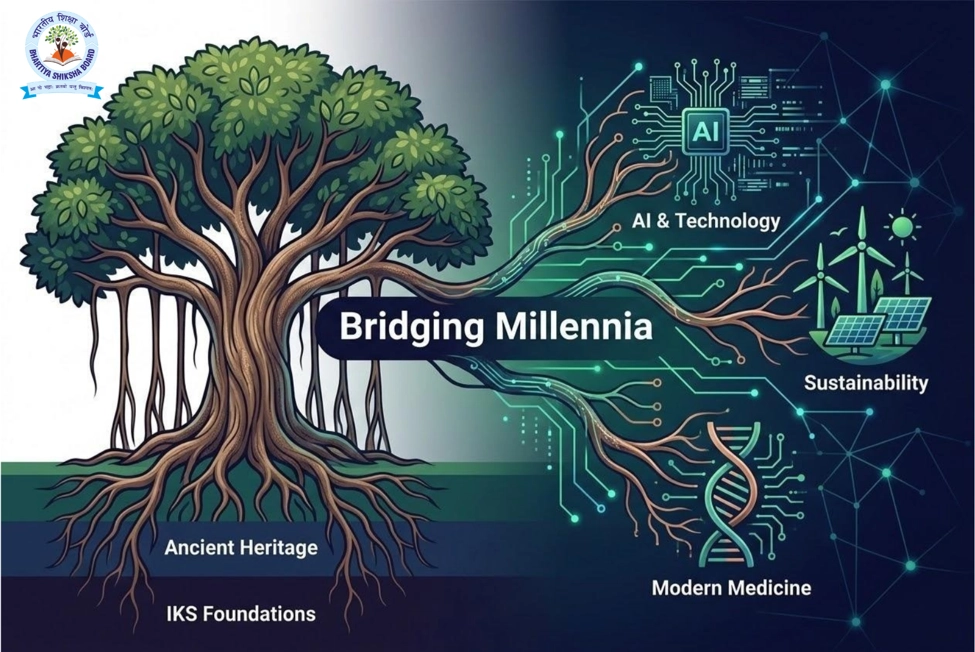
Though the 21st century has brought technological advancements, there are numerous challenges that exist in today’s world regarding health, society, and the environment. While the world continues to rely upon scientific advances, there is a need for an approach to the aforementioned challenges that considers both the technological aspects of the problems as well as technological approaches to solving those issues. Indian Knowledge Systems provide an approach to many of these challenges today.
Lifestyle diseases such as obesity, diabetes, cardiovascular diseases, and hypertension are prevalent today. Indian Knowledge Systems place an emphasis on physical activity, a healthy diet, healthy routines daily, and the importance of the body and mind being in harmony. These aspects align with the desire to prevent diseases and to improve the well-being of individuals in today’s society. According to the NSSO survey on Ayush, 46.3% of rural and 52.9% of urban individuals in India used Ayush for prevention or treatment of ailments during the previous 365 days.
The fast pace of life in modern society has led to numerous issues related to stress and emotional well-being. Practices such as Yoga and meditation promote emotional balance and well-being on a mental level. These practices are still utilized daily by numerous individuals as part of their efforts to manage their mental well-being.
Issues related to the environment such as climate change and the need for sustainability are some of the most pressing of today. Indian Knowledge Systems place an importance on using the resources of the planet responsibly, protecting the environment and its biodiversity, and living in harmony with the environment in which all individuals exist.
The rate at which biodiversity among the planet’s ecosystems is being lost is of great concern. However, Indian communities have practiced the preservation of biodiversity since ancient times. These examples of biodiversity preservation show how Indian knowledge Systems can contribute to the protection of the environment.
Finally, as with many of the challenges of the modern world, ethical dilemmas regarding technology are presenting themselves. Considerations of ethics and responsibility within Indian Knowledge Systems may help to resolve some of these challenges of the information age and the development of new technologies.
The concept of sustainable development is one of the most important goals for humanity and the planet today. The idea of connecting with the environment as a system of interdependence between all individuals, societies, and the planet’s environment is one of the suggestions of Indian Knowledge Systems. Such an idea helps to support the development of sustainable societies and the development of a plan for the planet that will ensure the sustainability of both the present and future generations of the planet’s inhabitants.
Overall, Indian Knowledge Systems are not a replacement for the science and technologies of the present world. However, they do provide historical insights and information regarding an approach to many of the world’s challenges that the present day and modern science can enhance to provide innovative and sustainable solutions to the challenges of today.
Conclusion
Indian Knowledge Systems refers to our collective knowledge that we have acquired over the course of thousands of years. Whether it be medicine, the environment, mathematics or law of the civilized world, Indian Knowledge Systems have something to offer about every topic.
With many problems that exist in the world today, why shouldn't we educate children on not only the sciences, but also about our Knowledge Systems? Modern science as we know it today and India's Knowledge Systems are not rivals fighting for dominance. They both work hand in hand.
As the world changes around us tomorrow and today, we should be educating students to thrive in a globalized world while also teaching them about the history and knowledge that built one of the oldest civilizations on earth. By allowing students to learn about both the sciences as well as Indian Knowledge Systems, we can ensure that students have the necessary tools to not only succeed today, but to conquer what tomorrow throws at them.
Students will be able to use knowledge from both the past and present to help them succeed in the future by learning about India's Knowledge Systems as well as teaching them modern science.
Frequently Asked Questions (FAQs)
What are Indian Knowledge Systems (IKS)?
IKS is an acronym used for Indian Knowledge Systems. These include all bodies of knowledge native to the Indian subcontinent that have been built up over millennia. IKS includes many branches of learning from mathematics to medicine, astronomy to architecture, linguistics to governance developed through centuries of observation, experimentation and discourse.
How was knowledge preserved and passed down in ancient India?
Ancient Indians didn't only teach using textbooks but also orally, through schools of thoughts, discussions between fellow intellectuals, artisans and the masses. Passing knowledge on to future generations was also done through teacher/student tradition.
What are the key characteristics of IKS?
IKS has many characteristics that form its philosophy. Some of them are Holistic pedagogy, Interdisciplinary studies, Learning by experiencing life, Ethics-driven curriculum. Others include Sustainability, Education wedded to research and application, Learning throughout life and rooting learning in relation to society's welfare.
What is a common misconception about IKS?
Many believe that IKS is the single-minded application of spiritual and religious education. Though those are part of it, IKS also encompasses in-depth study in areas such as science, math, medicine, agriculture, architecture, metallurgy, ecology, economics and the arts.
How does IKS contribute to modern challenges?
IKS provides historical insights and a holistic approach that can enhance modern scientific research to create innovative solutions. For example, it offers practices for managing lifestyle diseases and stress through Ayurveda and Yoga, as well as principles for environmental sustainability and biodiversity preservation.
What are some of the major sources of IKS?
Main sources are the Vedas (among the oldest Sanskrit texts), Upanishads (philosophical inquiry), Ayurveda (holistic health science), Arthashastra (politics and economics), Yoga (fitness and health), Vedangas (auxiliary studies), Nyaya (Logic), Vaisheshika (physics), grammar of Panini (grammar), as well as Classical Literature.
Is IKS a replacement for modern science?
No, IKS is not meant to replace modern science and technology. It can, however, be used alongside these techniques to offer unique views from the past that can help us find more long-lasting and creative ways to fix the issues of today.