Creative Writing Activities to Encourage Student Participation

Writing can be personal — some students may pour their hearts out, while their grammar may still need some attention.
On the other hand, some students may have strong grammar but struggle with creativity. And then there are students who have trouble accepting feedback. There are many facets to writing, and for many students, it can be a difficult task.
Some students don’t want to write because they find it tricky; others may hesitate because writing can be so personal.
So how can teachers engage students in writing while still teaching them to string together a proper sentence? How can they alleviate students’ fears? There are several engaging writing activities that can help students become more comfortable with writing while developing their skills.
Here are some writing activities that can engage student learning in the classroom.
Easy Writing Activities That Boost Student Learning
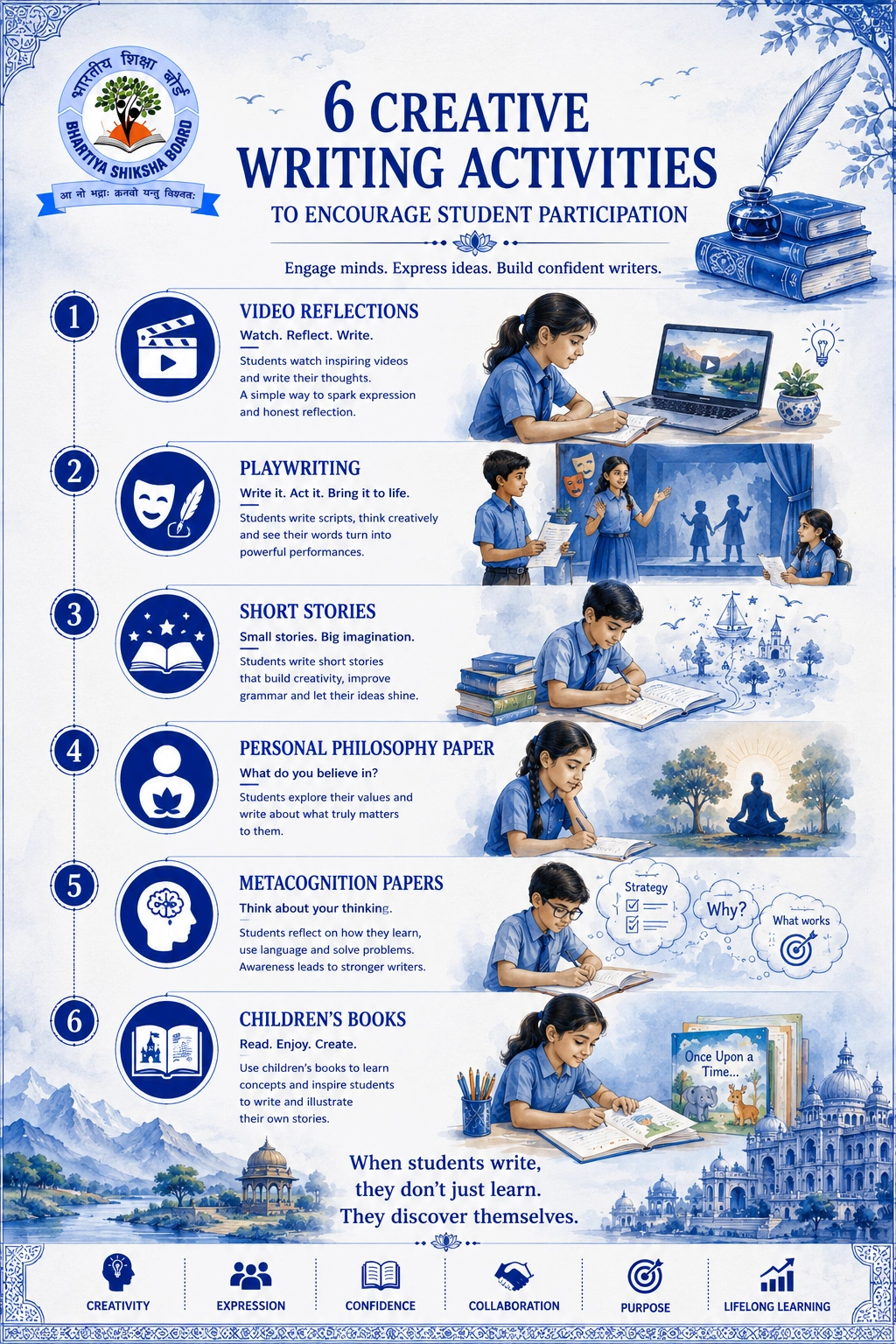
1. Video Reflections
Students nowadays enjoy watching videos and sharing content. Why not leverage that interest to get students writing?
There are lots of interesting and inspiring educational videos that have positive messages for students. This activity involves little preparation. Simply play an appropriate video and have students write a response. It’s interesting to see how passionate some students can get about clips when they relate to them.
This can also be a useful activity at the beginning of an academic session because it can give teachers an idea of where students are with their writing skills. It does not necessarily have to be graded. The activity can also integrate student choice by allowing students to recommend appropriate videos to write about.
Video reflections can engage students and motivate them to write while integrating their interest in technology and digital content.
2. Playwriting
Putting on plays as part of a drama or classroom activity, where students write and coordinate the production as a group, may or may not fit into every class, but playwriting — even for a short production — can be an interesting writing activity.
What’s really useful about playwriting is that it requires students to think more creatively and realistically about their writing. When it comes time to act things out, the script needs to be natural, believable, and comprehensible. Students can also edit their own scripts for some engaging grammar practice.
Who knows? There might be a future playwright in the classroom.
3. Short Stories
Sometimes, teachers feel pressed for time and have trouble finishing books on schedule. If that’s the case, consider reading and creating short stories.
Students can be surprisingly creative when writing them. A short story unit can focus on a particular genre or remain open. It can also focus on the elements of a story and teach students how to punctuate dialogue correctly.
Most importantly, students can express their creativity. It can be interesting to see what students come up with and how eager they can be to share their stories with the class. It’s a fairly laid-back activity but places a great deal of emphasis on imagination.
4. Personal Philosophy Paper
Another reflective writing activity is to ask students a simple question: “What is your personal philosophy?”
This activity gets students thinking about their lives while allowing them to put what they believe into words. Beliefs can be strong and hold emotion, which can encourage students to write thoughtful and meaningful pieces.
5. Metacognition Papers
There’s a lot of discussion in education around metacognition. In short, this big word means thinking about thinking. It can help students reflect on their own learning and thought processes.
Teachers can make it part of writing assignments by picking a variety of different topics to write about. For example, if students are having difficulty with commas, instead of only asking them to complete exercises, they could be asked to write about how and where commas should be used.
Yes, it may sound boring, but there can be choices within the task, and students often respond well to choices. Students could write a regular essay, story, or comic that provides examples of proper comma usage, strategies for implementing them, and so on.
Activities like this can encourage students to think about how they use language rather than relying only on multiple-choice quizzes.
6. Children’s Books
Children’s books can be wonderfully engaging.
They can be used to teach concepts such as allusions, parables, fables, rhymes, and independent and dependent clauses — the list goes on. Children’s books can also be connected with different learning objectives. The best part is that students often enjoy reading them.
Students can also create illustrations to accompany what they’re reading. When using this activity with older students, they can read the books aloud to younger students for an integrated learning experience.
It’s an engaging activity on many levels, and digital tools can also be used to help students create their own stories, bringing technology into the learning process as well.
The Truth About Writing
Teachers will inevitably come across students who struggle with or feel nervous about writing. It’s part of learning the complexities of the English language.
But if students don’t write, they won’t get better. Even when students do write, if they aren’t interested in what they’re writing about, they may have a hard time clearly expressing their thoughts.
The aim is for students to be able to write what they feel and think. If teachers and students work together to find assignments that students genuinely enjoy, writing can become a more meaningful experience.
One of the most interesting things about creative writing activities is that students can produce some profound work. Teachers can also learn quite a lot about their students through these activities.
Sometimes, it is easy to get lost in the technicalities of language. But even when the grammar may not always be there, students have something worth expressing.
For students, being able to express themselves in writing may take time. Teachers can help them become more confident and competent in expressing their thoughts through the written word.
Frequently Asked Questions (FAQs)
1. How can teachers make writing more engaging for students?
Teachers can use activities that give students opportunities to express their thoughts, make choices, and be creative. Video reflections, playwriting, short stories, personal philosophy papers, metacognition papers, and children’s books are all worth trying.
2. How can video reflections encourage students to write?
Students can watch an appropriate educational video and write a response to it. Videos that students can relate to may encourage them to express their thoughts while connecting writing with their interest in technology and digital content.
3. How can playwriting help students develop writing skills?
Playwriting encourages students to think creatively and realistically about their writing. When a script is acted out, students can consider whether it sounds natural, believable, and comprehensible. They can also edit their scripts for grammar practice.
4. Why are short stories useful for student writing activities?
Short stories give students an opportunity to express their creativity while learning elements of a story and practising skills such as punctuating dialogue correctly.
5. What is a personal philosophy paper?
A personal philosophy paper asks students to reflect on a question such as, “What is your personal philosophy?” It encourages them to think about their lives and put their beliefs into words.
6. How can metacognition be included in writing activities?
Students can be asked to write about their own learning and thought processes. For example, when learning comma usage, they could create an essay, story, or comic that includes examples of correct comma usage and strategies for using commas.
7. How can children’s books be used as a writing activity?
Children’s books can be used to teach concepts such as allusions, parables, fables, rhymes, and independent and dependent clauses. Students can create illustrations to accompany what they’re reading, and older students can read the books aloud to younger students for an integrated learning experience.