A Step-by-Step Guide to Project-Based Learning
Teachers often use projects in the classroom, but are they doing so effectively? Projects are useful for assessing learning and for moving students away from more typical activities. They are also a good place to bring in creativity, both from yourself as a teacher and from your students as the participants.
The term ‘project-based learning’, however, refers to something a little different from the projects we are all used to. It is a teaching method that uses projects over a longer period of time with fairly substantial academic goals.
Rather than using a project as a final, culminating activity at the end of a unit or lesson, project-based learning combines the learning, the curriculum and the instruction in one package. The learning happens during the project, and at its most basic it is about problem-solving. Through project-based learning, students gain knowledge about a topic while also practising critical thinking, collaboration and communication skills. These are ambitious goals, and that is why such projects are spread out over time.
With the right preparation, project-based learning can produce good outcomes for students and allow them to take charge of their own learning. This method can also spark students’ interest in new subjects and strengthen skills that will help them in the years to come.
5 Steps to Get Started with Project-Based Learning
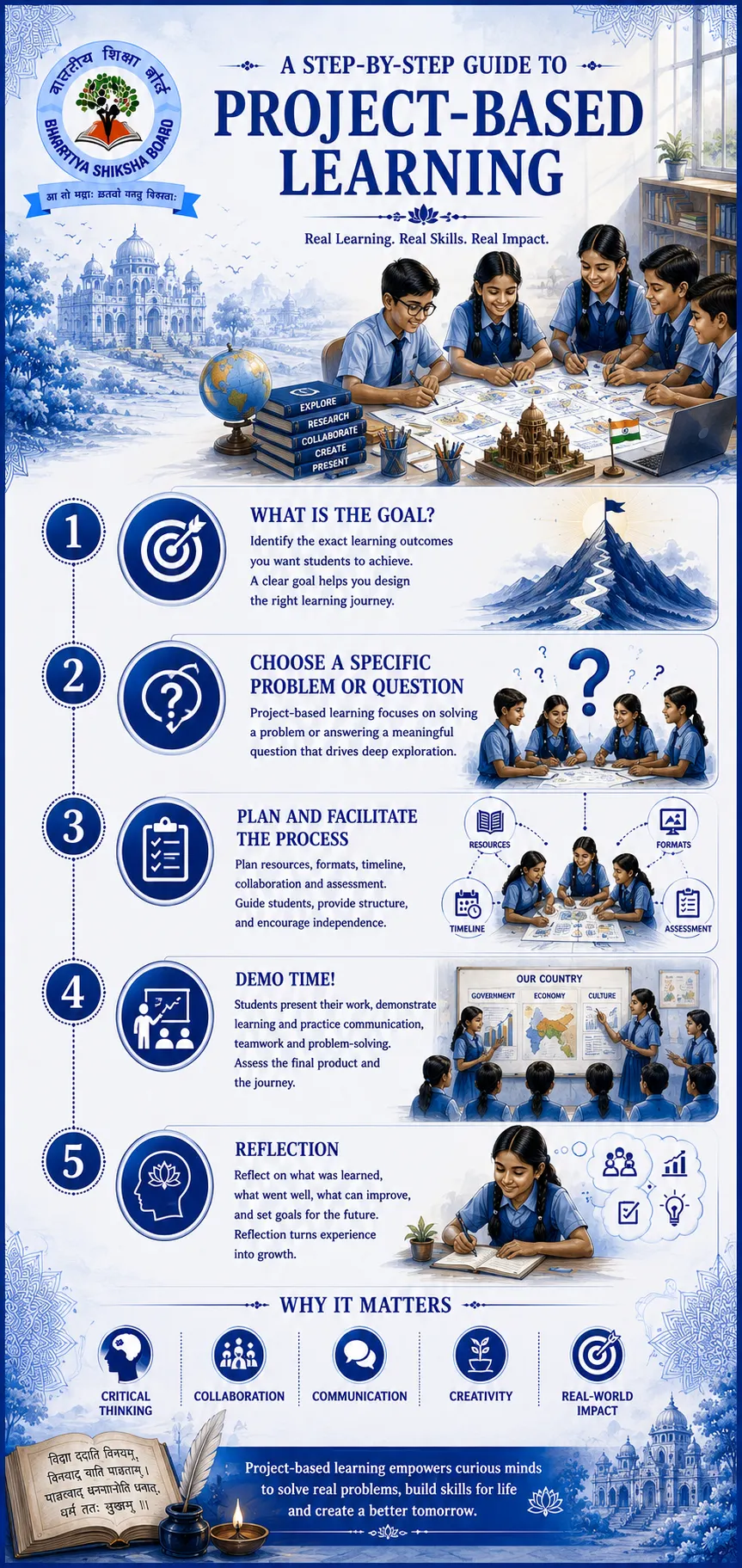
1. What Is the Goal?
First things first: what are you hoping your students will learn? Pin down the exact outcomes you are looking for so that you can better plan the path to that destination.
For step one, we will say the goal is to have students learn about what makes up a country: forms of government, economic plans, and any other considerations you would like to cover. These are large concepts, so they lend themselves well to this teaching method.
2. Choose a Specific Problem or Question
Project-based learning focuses on solving a problem or answering a question. Coming back to our example, let us say the question is this: “What do the main forms of government look like and how do they function? What do the main economic systems entail, and which one works best with your chosen form of government?”
Again, these are large questions on large topics. The value of this teaching method is that learning happens in a more natural and memorable way. Students will be exploring the topic with a degree of independence that would simply not be there with more traditional methods, such as a formal lecture.
3. Plan and Facilitate the Process
Now it is time to plan your project. Here are some questions to consider as you prepare the assignment:- What kinds of resources will your students need to work on their project?
- How could the project and the information be presented?
- What kinds of formats would work with the question or problem you are dealing with?
- What will the time frame be, and how will learning be assessed?
Project-based learning typically happens in groups or teams, so you will want to keep collaboration in mind during the planning phase.
For our create-your-own-country example, students would need access to good research material. Depending on your school, this may require booking computer or tablet time. You will also want to gather some useful resources to help students on their way, or to put together a short lesson on online research skills. Be sure to specify how much time to devote to research.
With younger students, you may also want to consider providing background information. Time should then be provided for group discussions and for students to debate the merits of the different forms of government and economic systems they are considering.
Once they have chosen the form of government for their country and the accompanying economic system, how will they present the information? Posters? Slide presentations? Videos? Some students may want to design a flag, write a national anthem, or create other emblems.
Finally, and this hopefully goes without saying, be sure to give students the criteria for assessment so that they understand how to complete their project well.
4. Time to Present
Now it is time for students to show what they have learned. Whatever the topic, it is a good idea for students to present their final product to the rest of the class. This gives them a chance to practise their oral presentation and listening skills, and it allows students to learn from their peers.
Remind students how to be a good audience beforehand, and go over some important presentation skills such as speaking clearly, maintaining eye contact and varying one’s tone of voice.
Have your chosen criteria ready as you assess the final product, the evidence of learning, and the additional skills such as teamwork, problem-solving and communication. Observe students during the creation of the project to see how well some of these targets are being met, teamwork in particular, with the final assessment happening during the demonstrations.
Throughout the project, for example, you may have students submit progress work along with peer evaluations. Then, rubric in hand, you can assess the final in-class presentation yourself.
Encourage groups to divide the presentation equally among their members so that everyone has a chance to speak. Alternatively, you may decide that each student must contribute to the presentation in some way that is not necessarily tied to speaking. One student could be in charge of the setup or the visual material, for instance.
Within their groups, and with the teacher’s approval, students should detail each member’s expected contributions and roles and submit this along with the final product.
5. Reflection
Part of project-based learning is taking the time to reflect on the progress made, or on the lack of it. As teachers, we should get into the habit of encouraging some form of reflection after lessons and projects so that students can assess their performance and make adjustments in future.
You could have students fill out a short ‘exit slip’ type of reflection in which they write a brief paragraph or complete a checklist on different aspects of their project, covering both its creation and the demonstration. They may also write about what they would like to improve on, or what they would do differently next time.
If you wish, you could make these reflections more involved. Students could write a report or record a short spoken reflection. In any case, students should discuss what they have learned about the subject and about their teamwork and presentation skills. You may also wish to encourage students to set realistic goals for future assignments or units.
Get Your Students Involved
Project-based learning is an engaging teaching method that involves students in their own learning, rather than keeping them tied to their desks and their books. These longer projects tend to stay with students well beyond your class, and they offer a good opportunity to develop many important skills.
Project-based learning can also support students in becoming more independent, more collaborative and more confident learners. Try it in your own class and see what it does for your students.
Frequently Asked Questions (FAQs)
1. What is project-based learning?
Project-based learning is a teaching method that uses projects over a longer period of time with fairly substantial academic goals.
2. How is project-based learning different from typical projects?
Rather than using a project as a final, culminating activity at the end of a unit or lesson, project-based learning combines the learning, the curriculum and the instruction in one package.
3. When does learning happen in project-based learning?
The learning happens during the project itself, in a more natural and memorable way. Students explore the topic with a degree of independence that would simply not be there with more traditional methods, such as a formal lecture.
4. What skills do students gain through project-based learning?
Students gain knowledge about a topic while also practising critical thinking, collaboration and communication skills.
5. What can project-based learning spark in students?
This method can spark students’ interest in new subjects and strengthen skills that will help them in the years to come.
6. What is the first step in project-based learning?
Decide what you are hoping your students will learn. Pin down the exact outcomes you are looking for so that you can better plan the path to that destination.
7. What does project-based learning focus on?
Project-based learning focuses on solving a problem or answering a question.