7 Practical Strategies to Engage Students in the Classroom

Think back to your own days as a student. Remember those teachers who inspired you to become a teacher yourself? Those teachers who unlocked your confidence, your creativity, your sense of community, your thirst for knowledge? What did those memorable teachers have in common?
If a lesson has stayed with you for decades, the teacher in question was doing something right in the matter of engagement, and we all want to bring that same sense of wonder and interest to our own students. Let us look at what made certain teaching styles and lessons so engaging.
7 Student Engagement Strategies
1. Get Students Interested
When beginning a new lesson, introducing a new topic, or even reinforcing prior knowledge, try to start in a memorable way. If you capture the interest of your students at the outset, they will be much more receptive to the lesson at hand.
When starting a unit on poetry, for instance, you might share the music and lyrics of a well-loved song and discuss the ways in which poetry exists in the world around us. Or you might begin a science lesson with an experiment that holds your students’ attention and makes them want to discover more.
2. Discuss Current Events
The world is full of interesting information and stories that can give your lessons a sense of immediacy and a greater sense of importance. Making connections with real-world events will engage students and make them feel that they are learning something genuinely relevant.
This can be applied at any grade level and in any subject. Science and social science lessons are particularly good opportunities for bringing in the outside world, but do not discount the possibilities in other areas. Younger students learning about animals could follow an interesting development at a local zoo. Older students exploring mathematics or physics could look at a recent example of engineering in their own city or district.
The opportunities are many, and bringing current topics and events into the classroom can create a new level of interest among your students.
Project-based learning typically happens in groups or teams, so you will want to keep collaboration in mind during the planning phase.
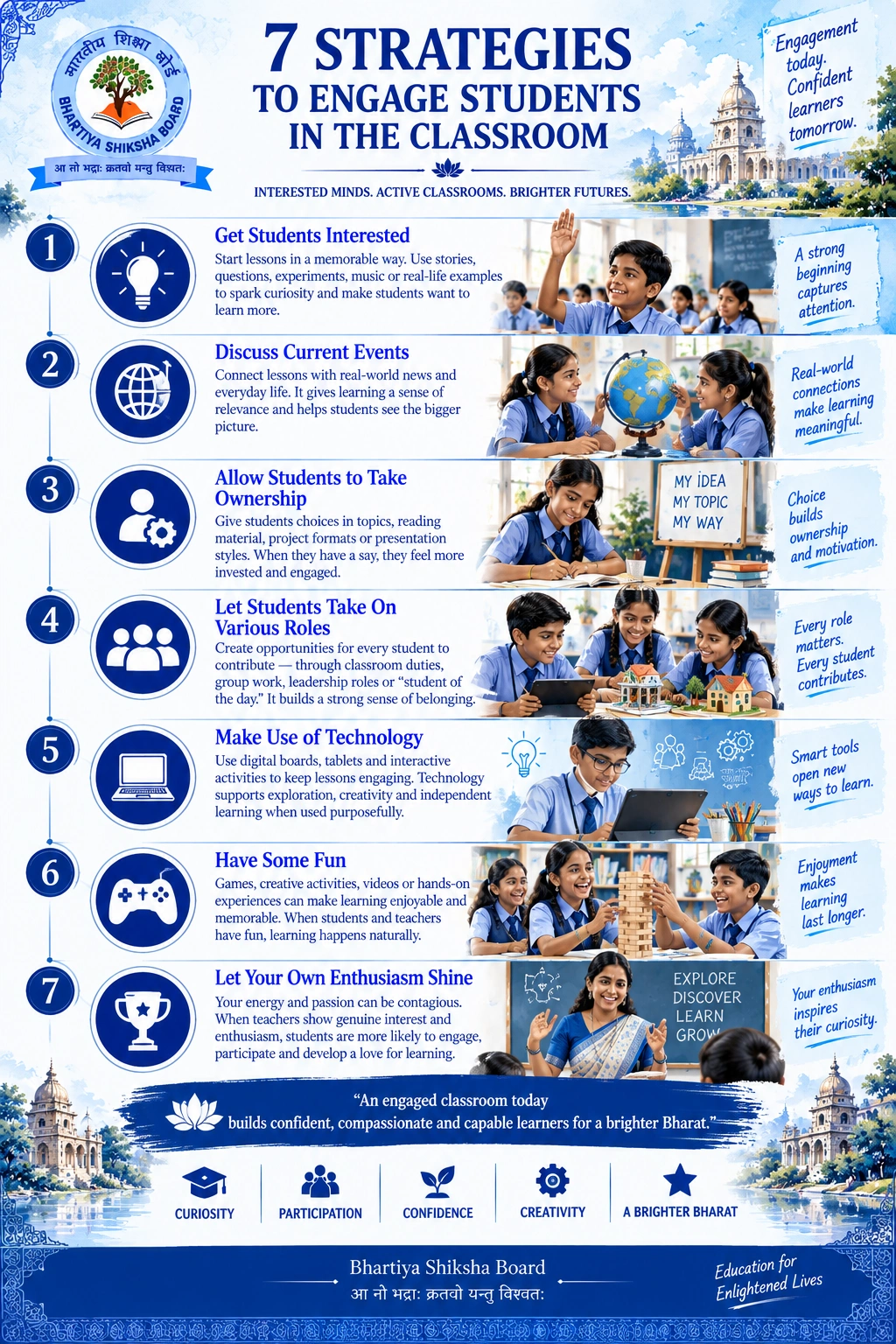
3. Allow Your Students to Take Ownership of Their Learning
If students are allowed to choose their own path, so to speak, they will be engaged as a matter of course. Students of all ages can pick their own research topic, a genre for reading, a presentation format, and so on.
There are many ways to achieve learning objectives creatively, and giving students greater academic freedom and flexibility is a simple way to increase engagement.
If a student is writing a research paper about a favourite scientist, sportsperson, or another person they admire, they will still be learning what you need them to learn about the writing process, with the added benefit of caring about the information they are uncovering.

4. Let Students Take On Various Roles in the Classroom
Everyone wants to belong, and every teacher wants that important sense of community in the classroom. Students who feel comfortable and confident that they are contributing to the classroom community will be more engaged in their learning.
Looking for some ideas? Introduce a ‘student of the day’ in the younger grades, or classroom duties with regular rotation at any grade level. When assigning experiments, projects and group work, make sure each student has a well-defined role and responsibility, sometimes playing to their natural strengths and at other times encouraging them to step outside their comfort zone.
Your students will be engaged as they take up their own particular role, and they will gain a sense of accomplishment from their individual contributions.
5. Make Use of Technology
Digital boards, tablets and other technology can create opportunities for student engagement in today’s classroom. Interactive learning activities and educational resources can keep students thoroughly engaged while also helping them develop useful technology skills.
Independent learning can flourish with tablets, where students are able to focus on what interests them most. Digital boards can be used to bring everyone together around a game, a video or some other activity.
Technology can be useful, but it works best when it supports the learning rather than becoming the focus of the lesson.
6. Have Some Fun
Learning sometimes happens in roundabout ways, and when students and their teacher are enjoying themselves, some very memorable learning can take place.
It can be something as simple as a mathematics game, a five-minute writing exercise in which students write about an interesting topic such as a dream job or their happiest day, or an outdoor science lesson or nature walk.
In any case, the goal is to step away from the regular routine and bring something unexpected into the classroom.
Learning can happen in many ways, and when your students are enjoying themselves and learning at the same time, everyone gains from it.
7. An Engaged Teacher Makes for Engaged Students
What are you as a teacher passionate about? What books or stories excite you? What kinds of activities do you look forward to weeks in advance? An engaged teacher is much more likely to have engaged students, so follow your own interests and let your enthusiasm show.
Let your students get to know you and the topics that fascinate you most. They will very likely enjoy themselves alongside you and will come to appreciate the importance of interest and enjoyment in education.
Think about bringing drama activities into your language class. Have students act out a favourite scene from a book you are reading, or read the characters’ dialogue aloud in class, with the roles changing each day. Begin a whole-class art project, such as a large mural on paper.
You will know you are doing something right when the lesson ends and your students want to carry on, rather than waiting anxiously for it to be over. Show that you want to be there in that classroom and that you are interested in what you teach, and the atmosphere will spread to your students.
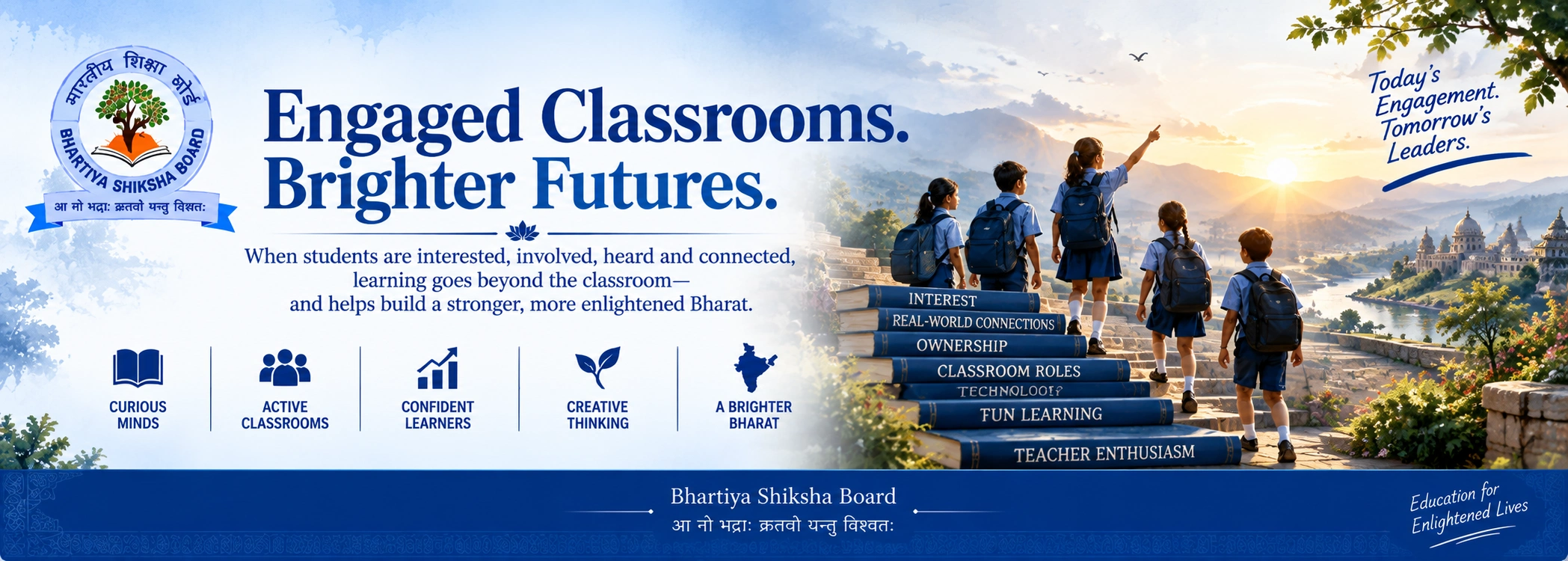
Student Engagement Makes the Difference
Bring in some or all of these ideas and you will be well on your way to having engaged students who are making memories and gaining knowledge that can stay with them for years to come.
Student engagement is achievable, but it cannot be forced. It grows when students feel interested, involved, heard, and connected to what they are learning.
For teachers, this means creating opportunities for curiosity, participation, responsibility and enjoyment in the classroom. These ideas also fit well with the broader aim of education, which is to help students become confident learners who take an active interest in their own learning.
So try something different, allow a little enjoyment into the room, and create some good classroom memories. Your students may remember those experiences for years to come.
Frequently Asked Questions (FAQs)
1. What is student engagement?
Student engagement is the interest, attention and involvement students bring to their own learning. It grows when students feel interested, involved, heard, and connected to what they are learning.
2. Why is student engagement important in the classroom?
Engaged students are more receptive to the lesson at hand and are more likely to retain what they have learned. A lesson that holds a student’s interest can stay with that student for years.
3. How can a teacher get students interested in a new topic?
Begin in a memorable way. You might share the music and lyrics of a well-loved song when starting a unit on poetry, or open a science lesson with an experiment that makes students want to discover more.
4. How do current events help with student engagement?
Making connections with real-world events gives lessons a sense of immediacy and makes students feel they are learning something genuinely relevant. This can be applied at any grade level and in any subject.
5. What does it mean to let students take ownership of their learning?
It means allowing students to make choices about their own work. Students of all ages can pick their own research topic, a genre for reading, or a presentation format, which increases engagement while still meeting the learning objectives.
6. How do classroom roles improve engagement?
Students who feel they are contributing to the classroom community are more engaged in their learning. Classroom duties with regular rotation, or well-defined roles within group work, give every student a sense of accomplishment from their own contribution.
7. How should technology be used to engage students?
Digital boards, tablets and other technology can support interactive activities and independent learning. Technology works best when it supports the learning rather than becoming the focus of the lesson.
8. Does a teacher’s own interest affect student engagement?
Yes. An engaged teacher is much more likely to have engaged students. When a teacher follows their own interests and lets their enthusiasm show, that atmosphere tends to spread to the class.